Date / time
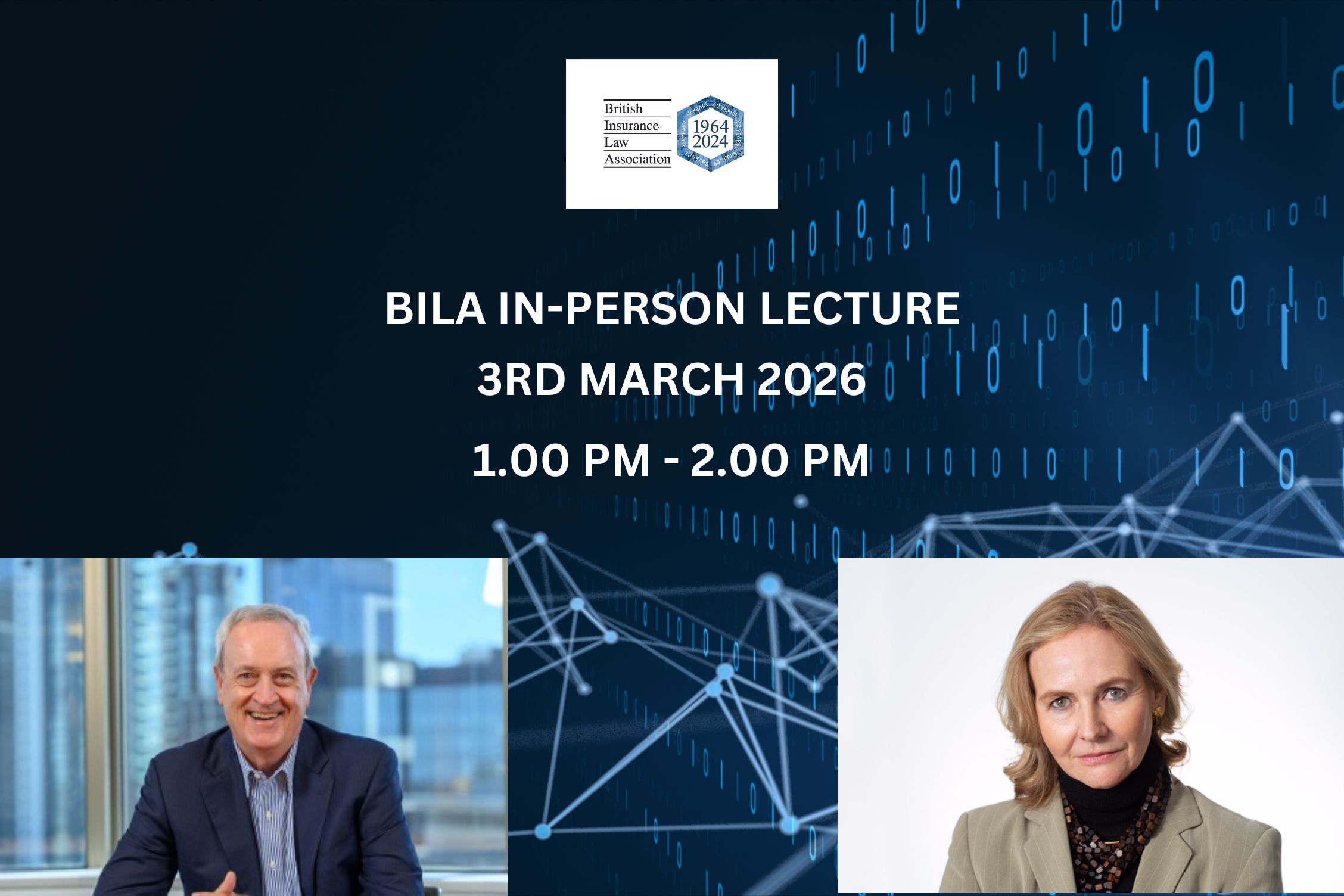
03/03/2026
1:00 pm - 2:00 pm
IN-PERSON EVENT AT LLOYDS OLD LIBRARY
Over the next decade in this new and evolving technology-led environment, innovative and diverse ways for people and organisations to interact will influence every facet of insurance, from industry services through to actuarial forecasting, underwriting and reinsurance.
The increasing sophistication and availability of powerful artificial intelligence (AI) and analytics to process vast datasets is challenging traditional conceptions pertaining to asymmetry of information and raising issues as to the integrity of data being analysed and the assumptions of the predictive models being deployed. Moreover, the development and expansion of AI in relation to driverless cars, robots, the use of autonomous machines to execute complex financial transactions and other innovations gives rise to diverse legal concerns ranging from the concept of “AI personhood” to bias and liability issues – with obvious insurance implications.
As world economies become increasingly digital, and the physical and digital worlds continue to be inter-connected through the use of AI, robotics and immersive technologies such as the metaverse, the need for risk transfer will remain. Distributed ledger technology (DLT) and blockchain, powered by smart contracts, provides a mechanism for such a digital bridge whilst also being consistent with the current market structure within which risk is pooled and distributed.
The world has become increasingly digitally connected and will continue to become more so – particularly with advancements in, and growth of, ‘internet of things’ technology going forward in areas such as driverless transport, automated product ordering, and manufacturing.
The ability to access ‘Big Data’ in conjunction with technological advances in artificial intelligence (AI), predictive analytics and blockchain create the foundation and operational capacity for new insurance products and new ways to create and consummate insurance transactions.
The presentation will explore – briefly – examples of new insurance products and doors being opened by technological advances to new and exciting opportunities within the insurance industry. It will consider too the legal challenges in this evolving landscape.
Topics to be traversed include usage based and on-demand insurance, embedded insurance, parametric insurance and the insurance of autonomous vehicles.
This convergence of new technologies and consumer demands is creating new and exciting opportunities within the insurance industry, but also complex challenges including determination of liability for harm or damage, privacy considerations, cyber security risks and insurer solvency.
Actual and prospective impacts upon insurance law and practice, serve to highlight opportunities and risks in navigating the changing or changed landscape.
For example, privacy concerns may be exacerbated as greater access to insured’s data and activities raises the risks of a data breach, misuse and fraud, including obtaining unauthorised knowledge about facets of consumers ́ lives, including sensitive data concerning the customer’s health, location, or financial status. Accordingly, regulators will have to carefully consider issues pertaining to the use, access and sharing of such sensitive insurance-related information.
Important – For admittance to Lloyd’s, please make sure to bring along your Lloyd’s pass if you have one or photo ID (driving licence, passport or work ID with company logo and full name).
REGISTRATION FOR THIS EVENT IS NOW CLOSED